


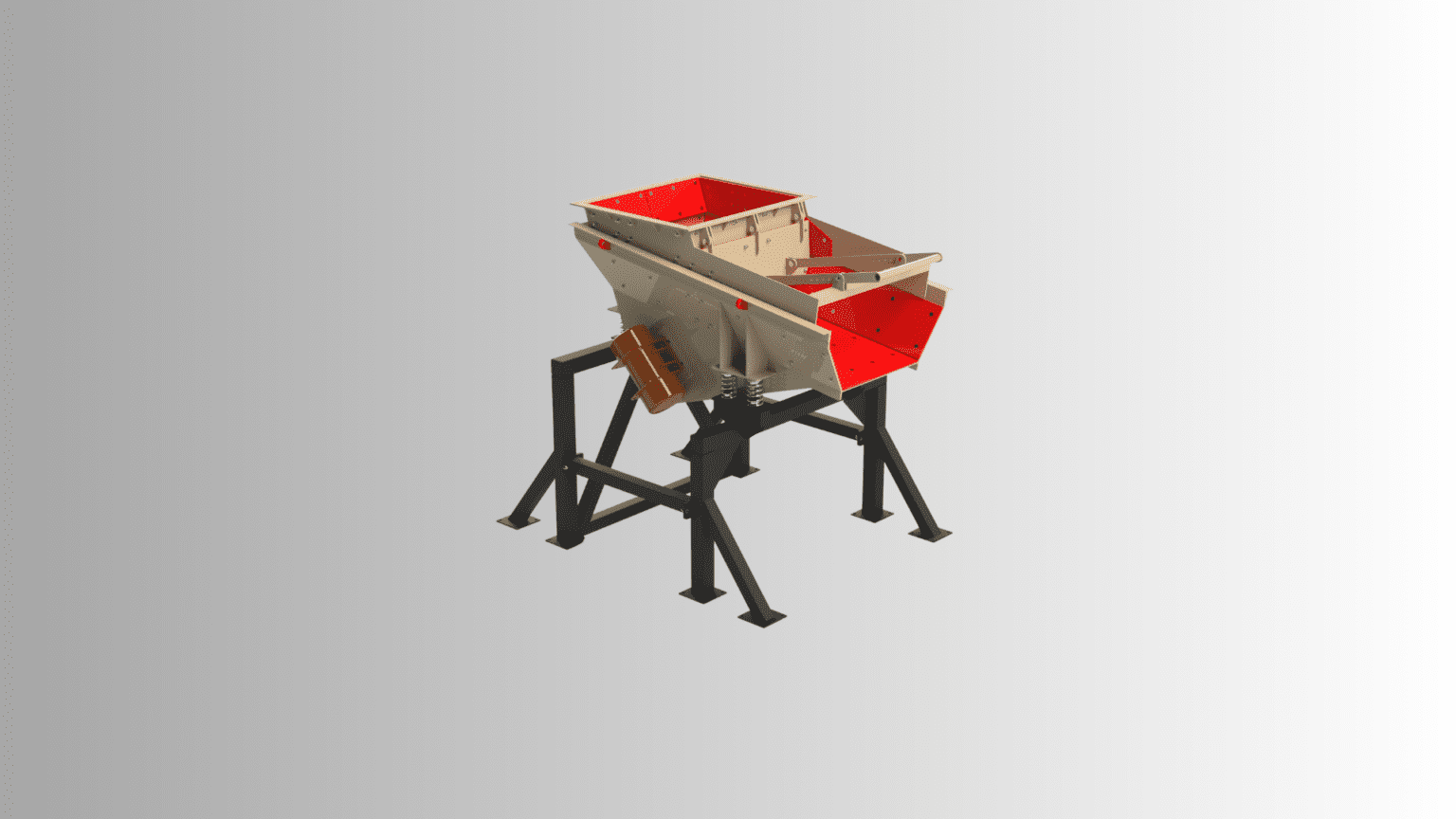
Vibratory feeders are indispensable equipment in mining production lines. These systems ensure balanced, controlled feeding of materials through vibration, regulating the process before crushing, screening, and weighing stages. However, not every vibratory feeder delivers maximum efficiency right out of the box. Optimizing engineering settings, installation, and operational parameters significantly extends the equipment’s lifespan and enhances process performance. Here are five key factors to consider for improving efficiency when using a vibratory feeder:
Correct Adjustment of Vibration Frequency and Amplitude
One of the most crucial factors affecting vibratory feeder efficiency is the proper configuration of vibration parameters. Frequency (vibration speed) and amplitude (vibration intensity) should vary based on the material type, particle size, and desired flow rate. Coarse and abrasive materials are more stably conveyed at lower frequencies, while fine or sticky materials may require higher vibration levels.
Improper settings can lead to issues such as material clogging, inconsistent flow, or equipment wear. Therefore, field testing should be conducted during commissioning to optimize vibration parameters for the specific application.
Ensuring Balanced Material Distribution
For optimal performance, material loading in the feeder’s supply area must be evenly distributed. Uneven material distribution can cause load imbalances, irregular vibrations, and eventually structural cracks in the feeder body.
Factors like the angle and height difference between the hopper and the feeder, and the placement of flow control elements (e.g., flaps or regulation covers), play a decisive role. Flow regulators at the inlet ensure even load distribution, enhancing feeder durability.
Rigid and Proper Equipment Installation
In vibration-driven systems, poor installation doesn’t just lower performance—it can cause equipment damage. Vibratory feeders should be rigidly mounted to a chassis as per the manufacturer’s specifications. Rubber dampers must be correctly positioned and evenly tensioned.
An uneven mounting surface or loose support structure can absorb vibration and lead to energy loss. Also, regularly inspecting bolted connections is essential to prevent loosening over time.
Taking Precautions Against Wear
In mining plants, conveyed materials are often abrasive. This can cause deformation, cracking, or punctures on the contact surfaces of the feeder. To maintain performance, wear-resistant plates (e.g., Hardox) should be installed on these surfaces, and protective linings should be regularly inspected.
For materials containing fine dust, surface adhesion may occur. In such cases, the vibration strength and lining material must be tailored to the specific material properties.
Integrating with Automation Systems
Modern production lines typically integrate vibratory feeders with load cells, frequency inverters, and PLC control systems. These allow the system to dynamically adjust speed and vibration based on material type and real-time capacity needs.
Automation integration contributes not only to energy efficiency but also to process safety and traceability. Flow irregularities, overloading, or underfeeding can be monitored and managed in real-time.
Vibratory feeders may seem simple in design, but if not properly managed, they can lead to significant performance losses. Vibration settings, material distribution, installation quality, wear resistance, and automation compatibility all directly impact efficiency. Therefore, in any facility, using a vibratory feeder is not merely about acquiring equipment—it’s a process that must be optimized with sound engineering. For reliable, long-lasting, and sustainable systems, thorough analysis and site-specific applications are essential.