


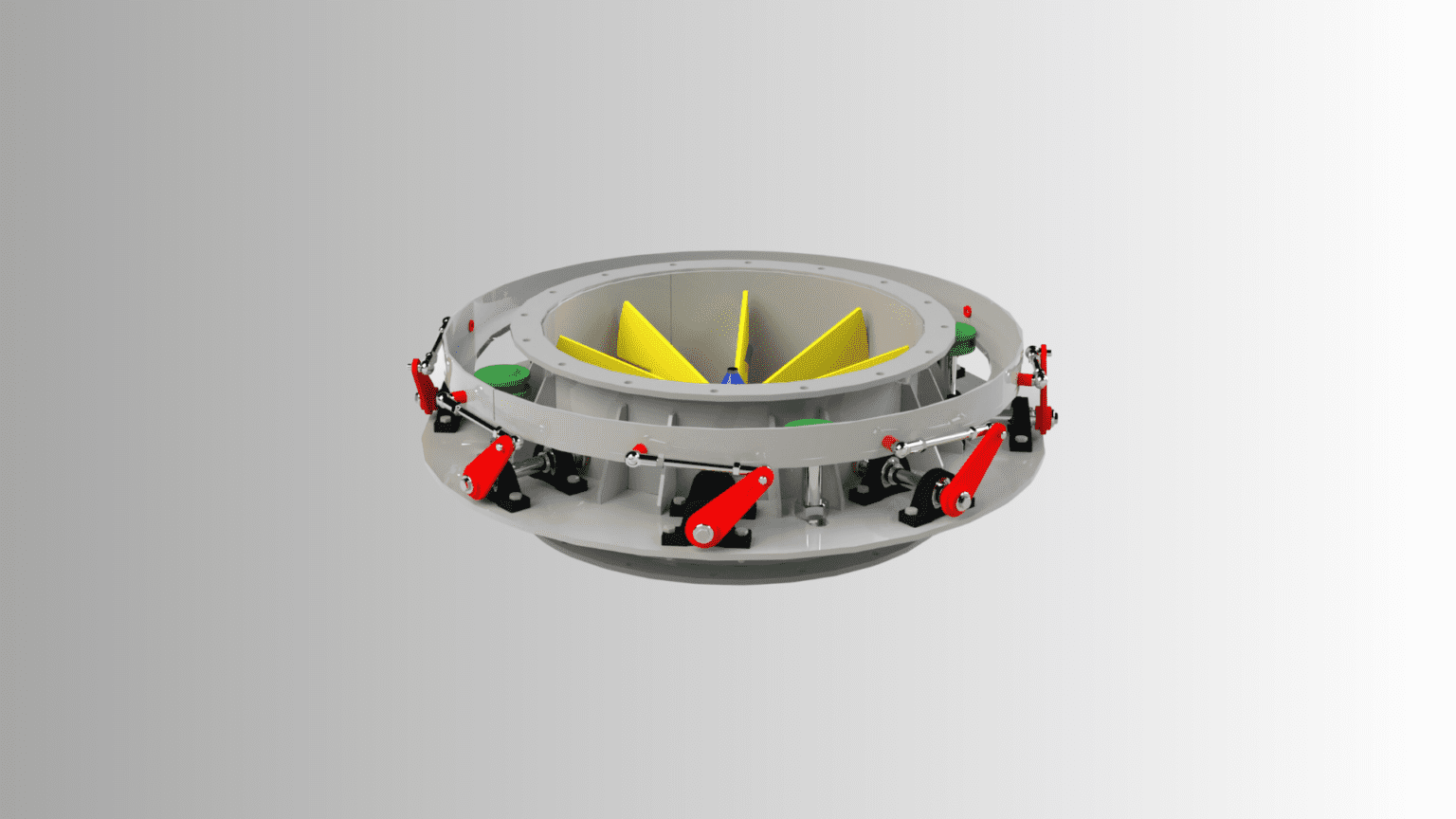
In industrial plants especially in mining production lines flow control equipment plays a crucial role not only in process efficiency but also in system safety. One of the most vital components of this equipment is the flap (valve), which is used to direct, cut off, and transfer raw materials in solid, granular, or powdered form in a
controlled manner. Not every process is suitable for the same type of flap. Choosing the wrong valve can lead to equipment wear and significant production losses. Therefore, selecting the right flap is a decision that requires detailed analysis at the engineering level.
Types of Flaps and Application Differences
Flaps are manufactured in different types based on the characteristics of the materials they carry and the operating conditions of the system. Common types include louver (jalousie) valves, pneumatic valves, slide gate valves, and rotary valves. In abrasive or high-temperature environments, special designs like steel flaps with compensators are also preferred.
Louver flaps are typically used in large-section ducts to direct air or gas flow, while pneumatic flaps are favored in high-frequency open-close operations, especially within automation systems. Slide gate valves are effective in loading and unloading lines where quick intervention is needed. Rotary valves are used both for flow control and dosing.
Technical Criteria That Influence Selection
The first criterion for choosing the correct flap is the physical nature of the material being transported. Dusty, granular, pelletized, or fibrous materials require different flap designs. For abrasive substances, valves with hardened inner surfaces or coated with wear-resistant alloys are recommended.
The second critical factor is process temperature and pressure. In systems operating at high temperatures, sealing performance becomes a priority—heat resistant gasket structures or metal-to-metal sealing designs should be considered. Additionally, if environmental requirements such as dust-tightness are important, the valve’s insulation capability must also be analyzed.
Third, operating frequency and system integration must be considered. In lines with frequent opening and closing, pneumatic or motorized flap systems are preferred. In cases where occasional but secure actuation is needed, manual or gear-driven systems are more appropriate. If the valve will be integrated with plant automation, actuator compatibility and signal feedback features should also be assessed.
Right Material and Design for Long-Term Performance
A flap’s long-term performance—not just its initial functionality—must be accounted for. In abrasive environments, using valves with replaceable body materials and sealing parts can reduce maintenance time and operational costs. In tight installation spaces, compact designs are preferred. To prevent backflow, spring-supported or bi-directional sealing flap designs improve system safety.
Correct valve selection should combine field experience, process analysis, and engineering support. Every process presents unique flow conditions and structural requirements. Therefore, instead of a “standard product” approach, a “process focused solution” principle delivers the best outcomes.
While flaps may seem like small components in industrial production lines, they have a major impact on the entire facility. An incorrectly selected flap can interrupt material flow, increase maintenance costs, and reduce system efficiency. Hence, valve selection must be based on a comprehensive evaluation of process characteristics, environmental conditions, and operational expectations. A flap designed from an engineering perspective and tailored to the field will be an indispensable part of a safe, durable, and high-efficiency system.