


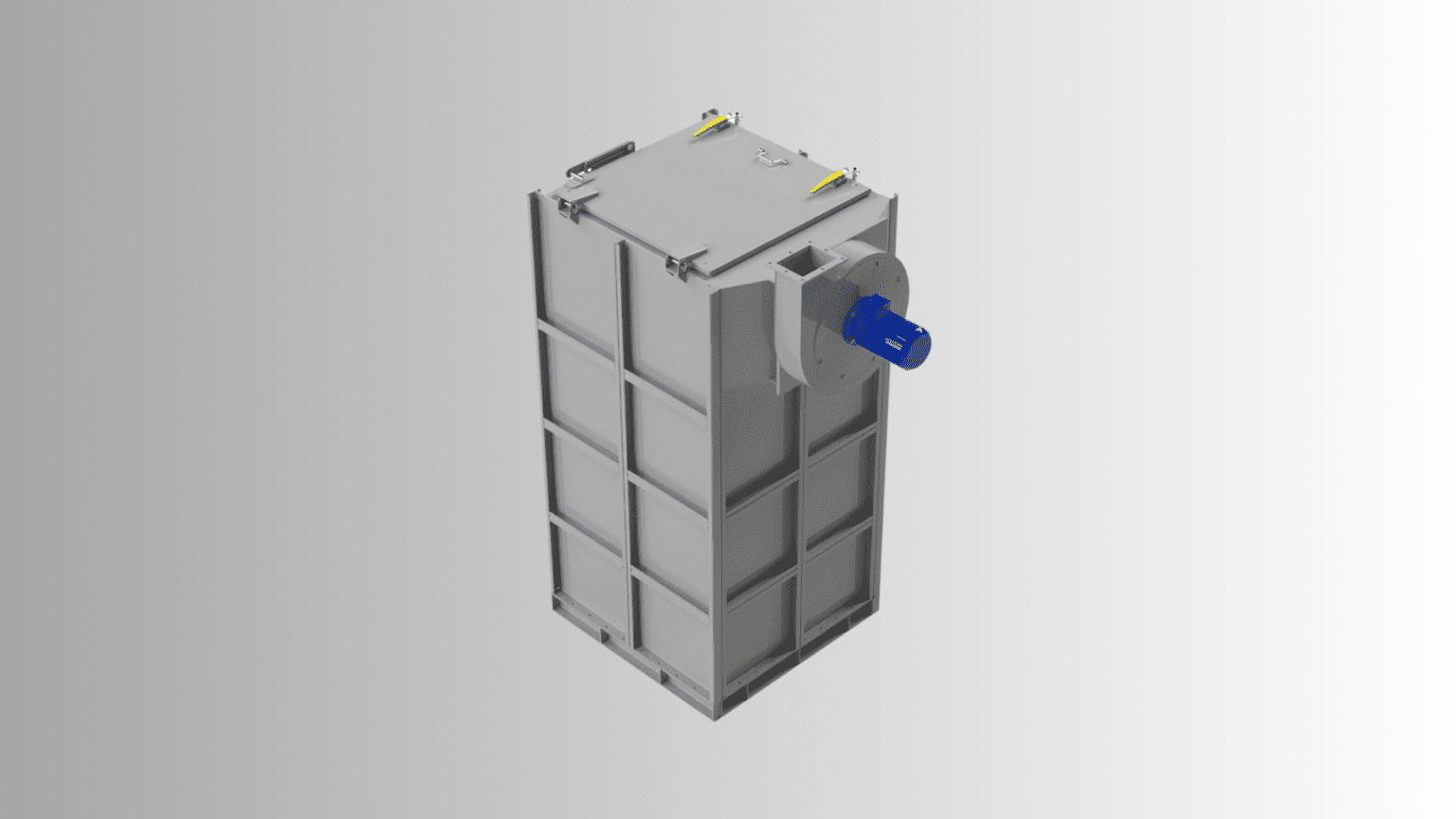
Silo systems are essential equipment for raw material storage across various industries, particularly in cement, flour, food, plastics, and chemicals. Every filling operation into a silo generates a substantial amount of dust. If this dust is not properly controlled, it poses both an environmental risk and reduces air quality in the production area. This is where silo-top filter systems come into play. These filters purify the air entering the silo, contributing to environmental protection and supporting efficient system operation.
Industrial Advantages of Silo-Top Filters
Silo-top filter systems are compact units mounted directly onto the top of the silo, making them seamlessly integrated into the process. During silo filling, the dusty air is directed to the filter, where filtration elements clean the air before it is released into the atmosphere, while dust particles are retained in the filter.
One of the most significant advantages of this system is its contribution to meeting environmental standards. By preventing high dust emissions, it ensures that the facility operates in compliance with environmental permits. It also prevents raw materials from being lost due to dispersion during the process, thus reducing product waste. Another critical benefit is maintaining pressure balance on the silo; the filter system ensures this balance, helping prevent silo damage and safety issues caused by overpressure.
Key Considerations in Filter Selection
When selecting a silo-top filter, it is essential to first analyze the characteristics of the process. Factors such as the amount of dust to be filtered, particle size, process temperature, and humidity levels are decisive. It’s also important to consider how often the filter will be cleaned and whether it includes an automatic cleaning system (typically a jet pulse system).
In addition to filtration efficiency, ease of maintenance is crucial. The ability to easily replace filter bags or cartridges ensures uninterrupted system operation. Compact designs are also advantageous as they adapt more easily to existing silo infrastructures. Availability of spare parts, service support, and long-lasting filter materials help reduce operational costs in the long run.
The filter’s suction capacity and airflow rate should be selected in accordance with the silo’s filling speed. Otherwise, dust leaks or filter blockages become inevitable. Moreover, the selected filter should comply with local and international environmental standards applicable to the relevant industry.
Silo-top filter systems are critical components that both enhance environmental compliance and support process efficiency in industrial facilities. A properly selected and well-maintained filter system minimizes dust-related problems during production and contributes to the sustainable operation of the facility. Tailored solutions designed to meet the specific needs of the process not only provide dust control but also improve operational safety and economic efficiency.