


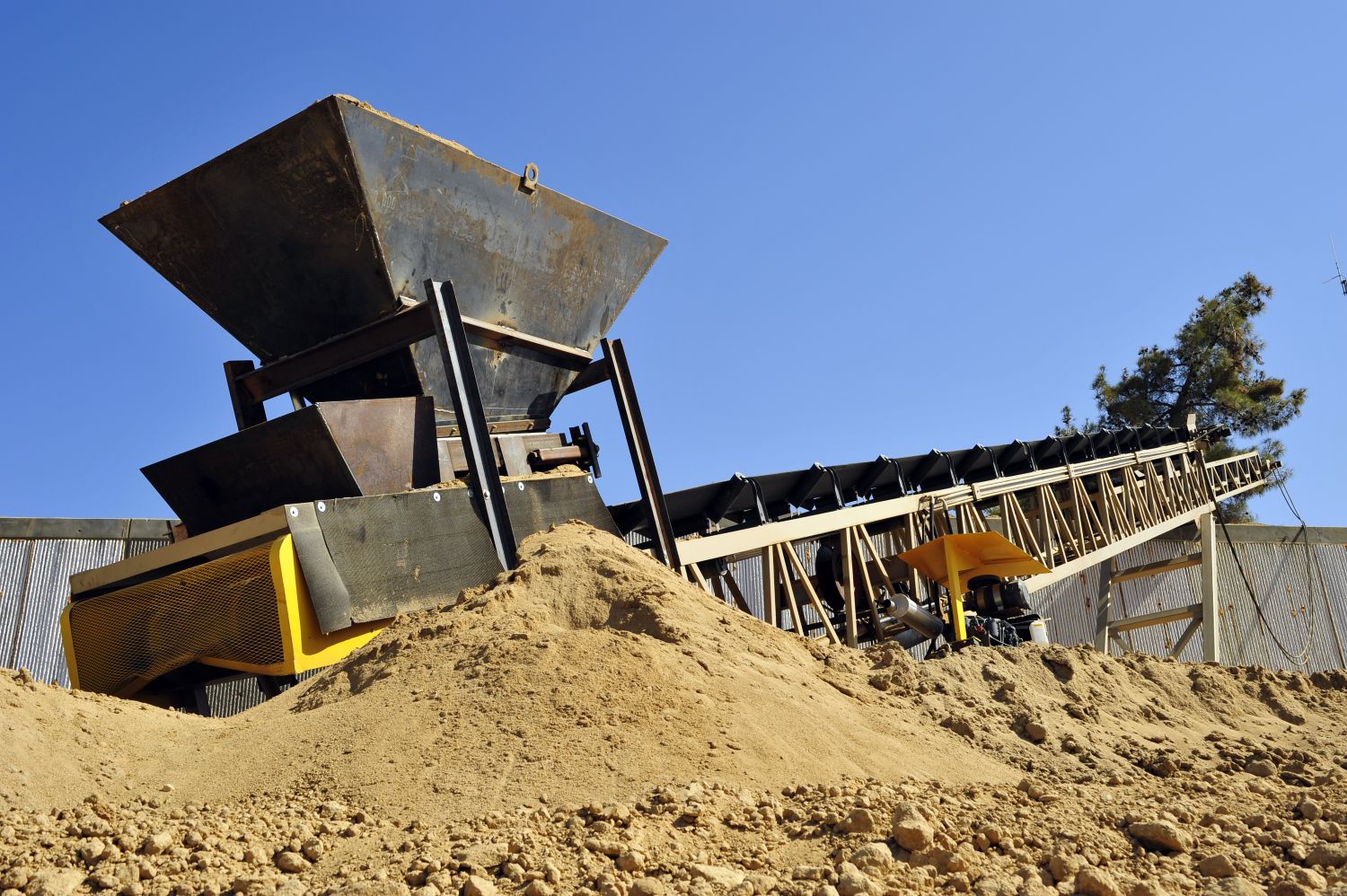
Process efficiency in mining and ore processing plants relies on the controlled and uninterrupted transport of bulk materials. The star feeder is a critical piece of equipment for flow control, particularly under harsh mining conditions characterized by high dust and abrasive materials. It is not merely a feeding unit; it is a strategic component that has a direct impact on system balance, energy efficiency, and operational safety.
The irregular flow of highly abrasive materials such as sand, coal, limestone, and metal ores can lead to clogging, dosing errors, equipment wear, and unplanned downtime. Star feeder systems ensure a more stable and safe operation of the process by mitigating these issues.
What is a Star Feeder in Mining?
A star feeder is a mechanical feeding device designed to transfer bulk solid materials from one point to another in a controlled and continuous manner. A star-shaped rotor located within a housing captures specific volumes of material through its rotational movement and discharges it downwards.
The most fundamental characteristic of this system is its ability to both regulate material flow and provide sealing between two different pressure zones. This is the primary reason why it is preferred, especially under hoppers, silos, filters, and cyclones.
Star feeders used in mining applications are manufactured from much more durable materials compared to standard industrial models and are designed to suit heavy-duty conditions.
Reasons Why the Star Feeder is Critical in Mining
The most fundamental difference distinguishing the mining sector from other industries is the character of the transported material. High hardness, sharp edges, irregular particle sizes, and intense dust generation create serious loads on equipment.
At this point, the star feeder undertakes the following critical tasks:
- Ensures continuous and balanced material flow
- Reduces environmental risks through dust sealing
- Prevents overloading of downstream equipment
- Facilitates process control
Thanks to these features, star feeders rank among the equipment that directly affects the overall efficiency of the facility.
Where are Star Feeders Used in Mining Processes?
Star feeders are used in mining facilities under hoppers and silos, at filter and cyclone outlets, in pre-crusher/screen lines, and in bagging systems. At these points where gravity flow occurs, they ensure the controlled, continuous, and sealed transport of the material.
Hopper and Silo Bottoms
Used to transfer stocked ore or auxiliary materials to the downstream process in a controlled manner. It prevents irregular discharge and reduces dosing errors.
Filter and Cyclone Outlets
Ensures the discharge of fine materials coming from dust collection systems without creating air leakage. This preserves the performance of fan and filter systems.
Pre-Crusher and Screen Lines
Used for regular feeding of crushed material to the next equipment. It prevents sudden surges and overloading.
Bagging and Packaging Systems
Ensures controlled transfer of material in applications requiring precise filling.
Star Feeder Working Principle
The working logic of the star feeder is quite simple but its effect is extremely critical. The rotor inside the housing rotates at a constant speed with the help of a motor and gearbox (reducer). The pockets between the rotor vanes take the material from the top and drop it from the bottom outlet.
This process takes place in three basic stages:
- Filling of material into rotor pockets.
- The rotor carrying the material by turning.
- Controlled discharge of material from the bottom outlet.
Thanks to this mechanism, both a constant flow rate is provided, and air passage between the upper and lower systems is prevented.
Importance of Star Feeder Design in Harsh Mining Conditions
The design of star feeders used in mining applications differs significantly from standard industrial solutions. An incorrectly designed system wears out quickly and leads to serious maintenance costs.
Body and Rotor Material
For high abrasion materials, the body and rotor must be manufactured from wear-resistant steels. Wear plates like Hardox are frequently preferred at this point.
Rotor Type Selection
Open-type rotors are more suitable for coarse-grained materials. Closed-type rotors provide better sealing for fine and dusty materials.
Clearance Tolerances
The clearances between the rotor and the housing directly affect both sealing and the wear rate. Correct calculation of these tolerances is of critical importance in mining.
Relationship Between Star Feeder and Slide Gate
In mining facilities, the star feeder often works together with a slide gate. These two pieces of equipment are complementary.
The slide gate is generally used to completely isolate the line during maintenance and emergencies. The star feeder provides flow control during continuous operation. Thanks to this combination, both safe maintenance can be performed, and process continuity is preserved.
Technical Criteria to Consider When Choosing a Star Feeder
Wrong equipment selection seriously affects not only the initial investment cost but also long-term operating expenses.
Material Properties
Particle size, moisture rate, and abrasiveness of the material to be transported must be analyzed correctly.
Capacity and Flow Calculation
The volume and rotation speed of the star feeder must be suitable for the process requirement. Excessive or insufficient feeding disrupts the system balance.
Drive System
Gearbox and motor selection must be suitable for continuous operating conditions. Low RPM, high torque systems are preferred in mining.
Sealing Details
In dusty environments, the quality of sealing elements is critical for both equipment life and occupational health.
Star Feeder and Occupational Safety in High-Dust Environments
Dust generated in mining facilities poses a serious risk not only for equipment but also for employees. Feeding systems with insufficient sealing increase the amount of dust released into the ambient air.
A correctly selected star feeder:
- Minimizes dust leaks.
- Reduces the risk of explosive dust.
- Ensures a safer working environment.
In this respect, the star feeder is not only mechanical equipment but also an important element in terms of occupational health and safety.
Maintenance Advantages in Star Feeders
In mining facilities, maintenance times mean direct production loss. Therefore, ease of maintenance is of great importance in star feeder design.
Easily removable covers, accessible bearing housings, and modular rotor design significantly shorten maintenance times. Additionally, a regularly maintained system prevents unexpected malfunctions.
Star Feeder in Terms of Energy Efficiency
Irregular material flow causes downstream equipment to be strained unnecessarily and energy consumption to increase. Thanks to the star feeder, material flow is stabilized, and energy consumption is optimized.
It ensures that equipment such as fans, conveyors, and crushers operate more balanced.
Star Feeder is a Long-Term Investment in Mining
Star feeder selection should consider not only today’s needs but also the future production plans of the facility. Low-quality or incorrectly selected equipment returns as high maintenance costs and unplanned downtime in a short time.
A star feeder selected with the right material, appropriate design, and specific to process conditions secures the annual profitability of the facility. The cost of a short-term production downtime can often be much higher than the price of quality equipment.
Reliable Flow Control in Harsh Mining Conditions
In harsh mining conditions, the star feeder is critical equipment located at the heart of the process. A correctly designed and selected system not only regulates material flow; it directly affects plant safety, energy efficiency, and operational continuity.
Success in mining is largely hidden in the details. When handled with the right approach, the star feeder, which is one of these details, becomes one of the strongest supporters of the facility.