


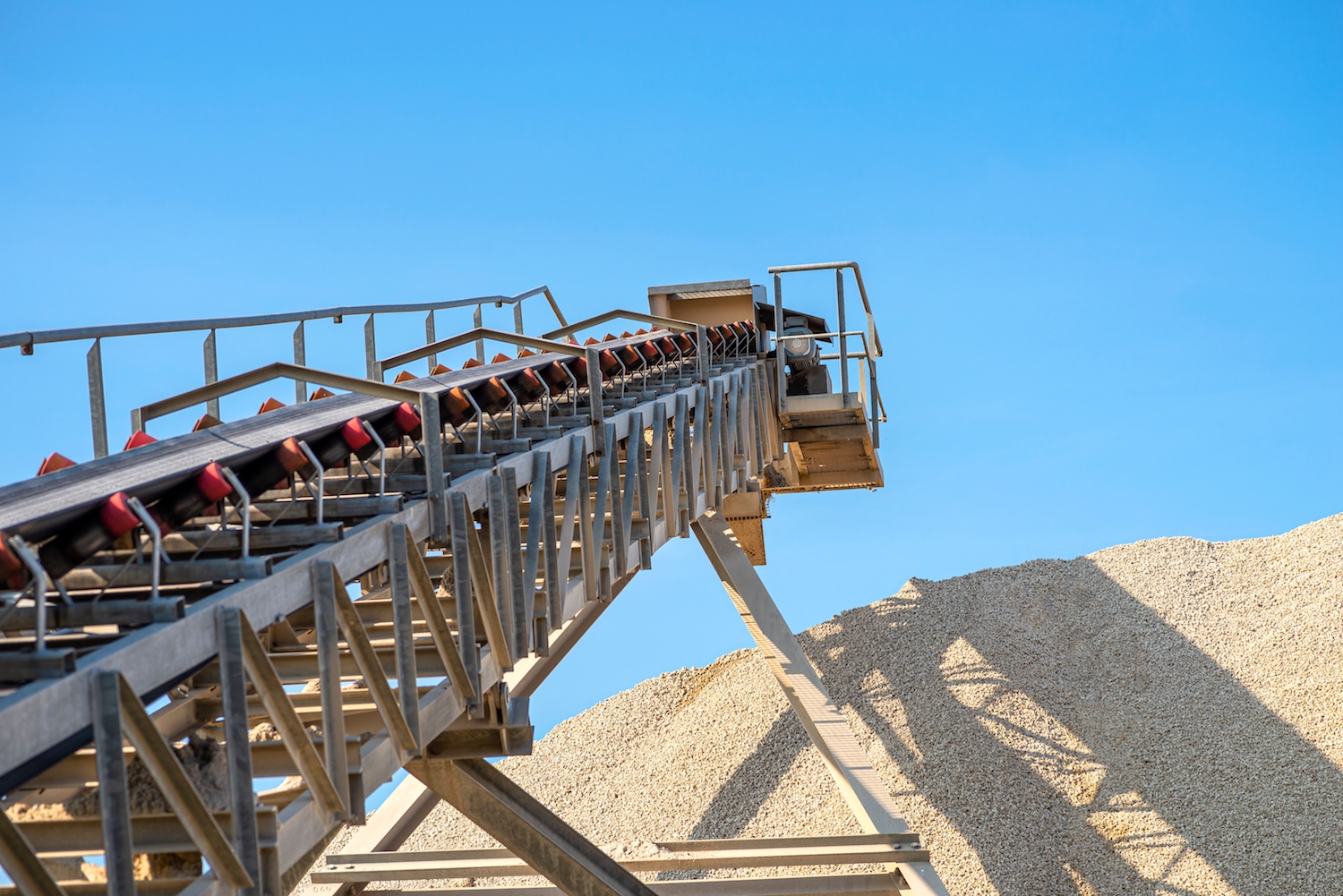
Belt conveyor systems are not just a transport solution in modern mining operations; they are a strategic infrastructure element in terms of efficiency, sustainability, and cost control. Increasing competition, fluctuations in energy costs, and environmental obligations direct mining enterprises towards more predictable and integrated transport systems. At this point, belt conveyors are among the fundamental systems that directly affect the entire production chain. Continuity is of great importance in transporting the ore from the pit to crushing-screening plants, and from there to beneficiation or stockpile areas. Belt conveyor technologies contribute to the stable and controlled execution of mining operations by providing this continuity.
Continuous Flow and Process Stabilization in Mining
The healthy functioning of production processes in mining depends on the material flow being balanced and controllable. Truck-based transport systems work intermittently depending on loading and unloading cycles and can cause sudden load changes on process equipment.
Homogeneous Flow Rate and Equipment Life
Belt conveyor systems support process stabilization by transporting material with a continuous and homogeneous flow rate. When crushers, screens, and grinding equipment are fed steadily, mechanical stresses decrease, equipment life extends, and capacity is used more efficiently.
Bottleneck Management and Buffer Systems
Conveyor lines integrated with intermediate stock bunkers and buffer zones balance sudden fluctuations that may occur in production. Temporary stops or capacity increases at the pit exit do not directly affect the rest of the facility. In this way, equipment operates stably without being exposed to continuous start-stop cycles.
Smart Drive Systems and Automation
Frequency-controlled drives (VFD) enable the dynamic control of speed and torque in belt conveyor systems. Changes in material hardness or feed amount can be detected instantly, and belt speed can be adjusted accordingly. This structure prevents overloading of crushers and screens, reduces blockage risks, and optimizes energy consumption. A correctly constructed automation infrastructure significantly strengthens production continuity.
Cost Effect of Belt Conveyors in Mining
Transport costs have a significant share within total operating expenses in mining. Truck transportation creates high and variable costs due to fuel consumption, tire wear, maintenance needs, and intense labor requirements. Belt conveyor systems, on the other hand, offer a lower and more predictable operating cost by working with electrical energy. The reduction of dependence on fossil fuel provides serious cost advantages in the long run.
Predictive Maintenance and Digital Monitoring
Modern conveyor systems can be continuously monitored with temperature, vibration, belt slippage, and wear sensors. Collected data is analyzed with predictive maintenance approaches to detect possible malfunctions in advance. Thus, maintenance activities are integrated into the production schedule without causing unplanned downtimes.
Belt Conveyor Systems in Terms of Energy Management
Deep pits and long transport distances make high-strength belt solutions mandatory. Steel cord belts offer a reliable solution in such applications thanks to their high tensile strength and low elongation values. Correct belt selection extends the service life of the system and lowers the total cost of ownership. Compared to engine and tire changes frequently experienced in truck transportation, conveyor systems provide a more stable cost structure.
Energy Management and Efficiency Oriented Design
Energy consumption is a determining factor in both the economic and environmental dimensions of mining operations. Belt conveyor systems provide advantages in energy use thanks to the high efficiency of electric motors.
Regenerative Braking and Energy Recovery
In downhill conveyors used in inclined fields, motors can operate in generator mode while the loaded belt moves in the downward direction. The energy released in this process is converted into electrical energy and can be reused within the facility.
Low Rolling Resistance Technologies
Rolling resistance occurring at the contact point between the belt and the idler can lead to serious energy losses in long-distance lines. Belt technologies with low rolling resistance minimize these losses, reducing the motor power requirement.
Belt Conveyors in Terms of Occupational Health and Safety
Occupational health and safety is a priority issue in mining. Intense truck traffic within the site is one of the main causes of serious work accidents. Belt conveyor systems reduce risks at the source by reducing this traffic.
Advanced Protection and Safety Systems
Modern conveyor lines are equipped with emergency stop systems, slippage and speed sensors, pulley guards, and protective covers. As the automation level increases, risky areas requiring human intervention decrease, and a safe working environment is provided.
Remote Monitoring and Autonomous Inspection
Remote monitoring systems reduce human presence in dusty and risky regions. Central control rooms and visual monitoring solutions facilitate operational supervision in large-scale mine sites.
Environmental Sustainability and ESG Compliant Transport
Belt conveyor systems offer solutions compatible with environmental sustainability and ESG criteria. The reduction of diesel fuel use directly lowers greenhouse gas emissions. Closed or covered conveyor designs limit dust propagation and minimize environmental impacts. Lower noise levels compared to truck transportation provide a significant advantage, especially in sites close to residential areas.
The Future of Belt Conveyor Systems
Belt conveyor systems are among the fundamental infrastructures that combine efficiency, safety, and sustainability in mining. Systems designed with correct engineering and feasibility studies offer high performance and low total cost in the long run. Developing sensor technologies and artificial intelligence-supported analysis solutions allow for the instant monitoring of the quality and flow of the material on the belt. These developments make belt conveyors an indispensable part of the digital and autonomous mine sites of the future.