


In mining production facilities, material handling systems are critical infrastructure components that directly affect overall efficiency and production continuity. The choice of conveying system should be based on the physical characteristics of the material to be transported, capacity requirements, plant layout, and ease of maintenance. Among the most common solutions in mining applications are screw conveyors and belt conveyors. Each system has its own advantages and limitations that must be evaluated based on the application conditions.
Screw Conveyors: Enclosed System, Compact Solution
Screw conveyors are typically preferred for short-distance horizontal or inclined transport of powdered, granulated, or finely ground minerals. Thanks to their enclosed structure, they prevent dust dispersion into the environment, contributing to cleaner processing. Their compact design also allows easy integration into tight spaces, offering a major advantage in facilities with limited layout flexibility.
For abrasive materials, screw conveyors can be made from special steels or lined with wear plates to extend equipment life. The main limitation of screw conveyors lies in their limited transport capacity and increased energy consumption over
long distances. In high-capacity operations requiring continuous transport, screw systems alone may not be sufficient.
Belt Conveyors: High Capacity and Distance Efficiency
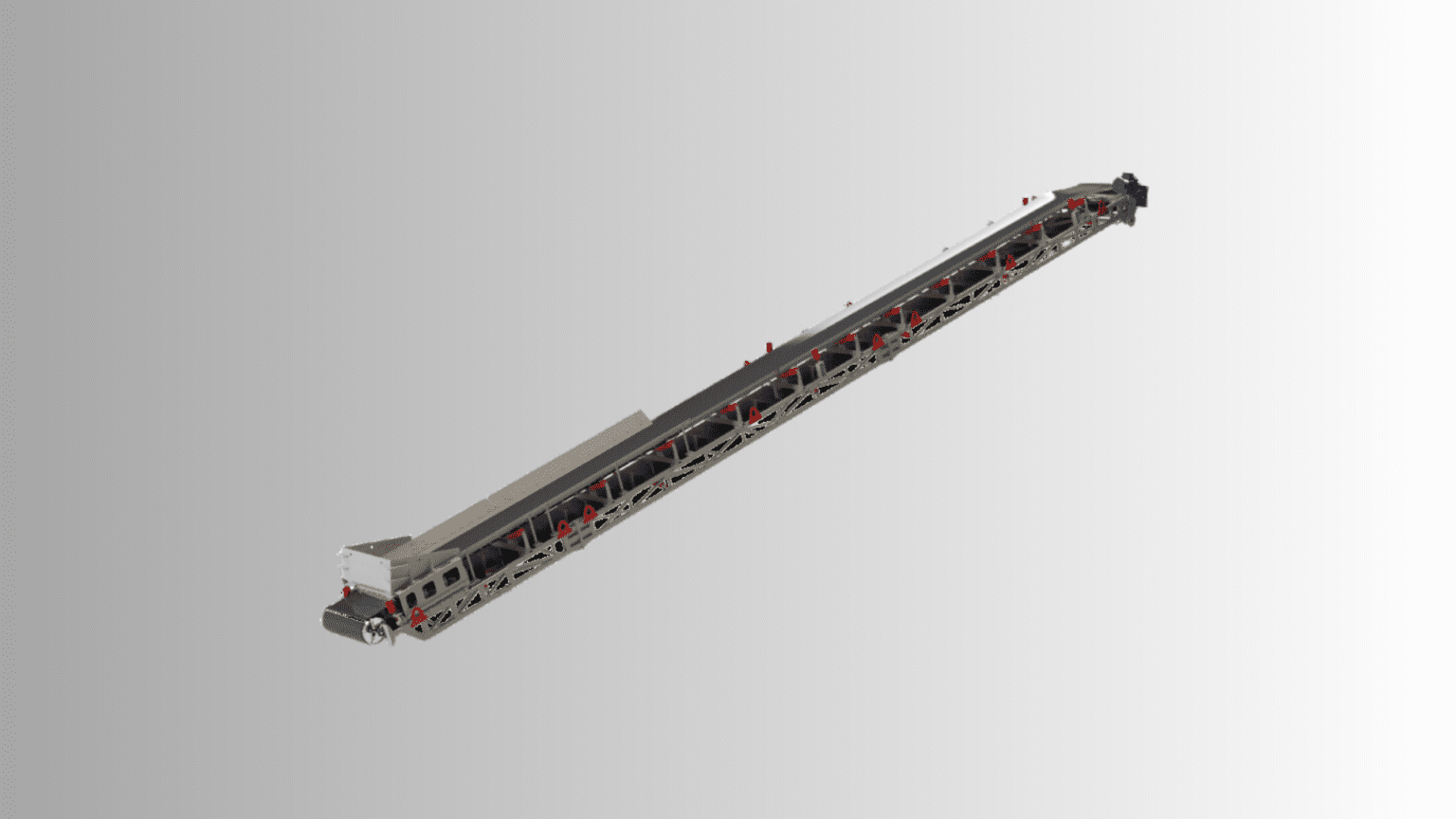
Belt conveyors can be implemented as open or closed systems and are especially preferred for transporting coarse, moist, or blocky materials. Due to their ability to transport large volumes over long distances with minimal incline, they are widely used in large-scale mining facilities. Their modular structure makes maintenance easier and allows for smooth integration into various transfer points.
Additionally, the belt type, structure, and tensioning system can be customized according to the material being transported. Outdoor belt conveyor systems require additional dust control measures and protective enclosures to withstand harsh weather conditions. In the case of abrasive or sharp materials, belt life may be shortened, so careful selection of rubber type and surface coating is essential.
System Selection Based on Application Criteria
Screw conveyors are ideal for plants that require compact systems, operate indoors, and need to transport small volumes over short distances. They offer high efficiency for finely ground materials, dust control, or controlled dosing applications.
Conversely, belt conveyors are more suitable for high-capacity, long-distance, and large-volume material transport. They offer more efficient solutions for mining fields, open-pit operations, and crushing-screening plants with heavy loading and unloading activities.
Both systems can be optimized through proper engineering and process analysis. Choosing the wrong conveying system may shorten equipment lifespan and reduce operational efficiency in the long term.
In mining facilities, the choice of conveying system is not merely an equipment decision it is an investment in the overall process. Screw and belt conveyor systems should be designed according to specific needs, with careful consideration of the material characteristics, transport distance, environmental conditions, and production plan. The right conveying solution not only facilitates production but also reduces maintenance costs, improves energy efficiency,